

AIOMEGA Announces Three Australian Patents in Oral-Airway Technology and intelligent Physical-Activity Applications
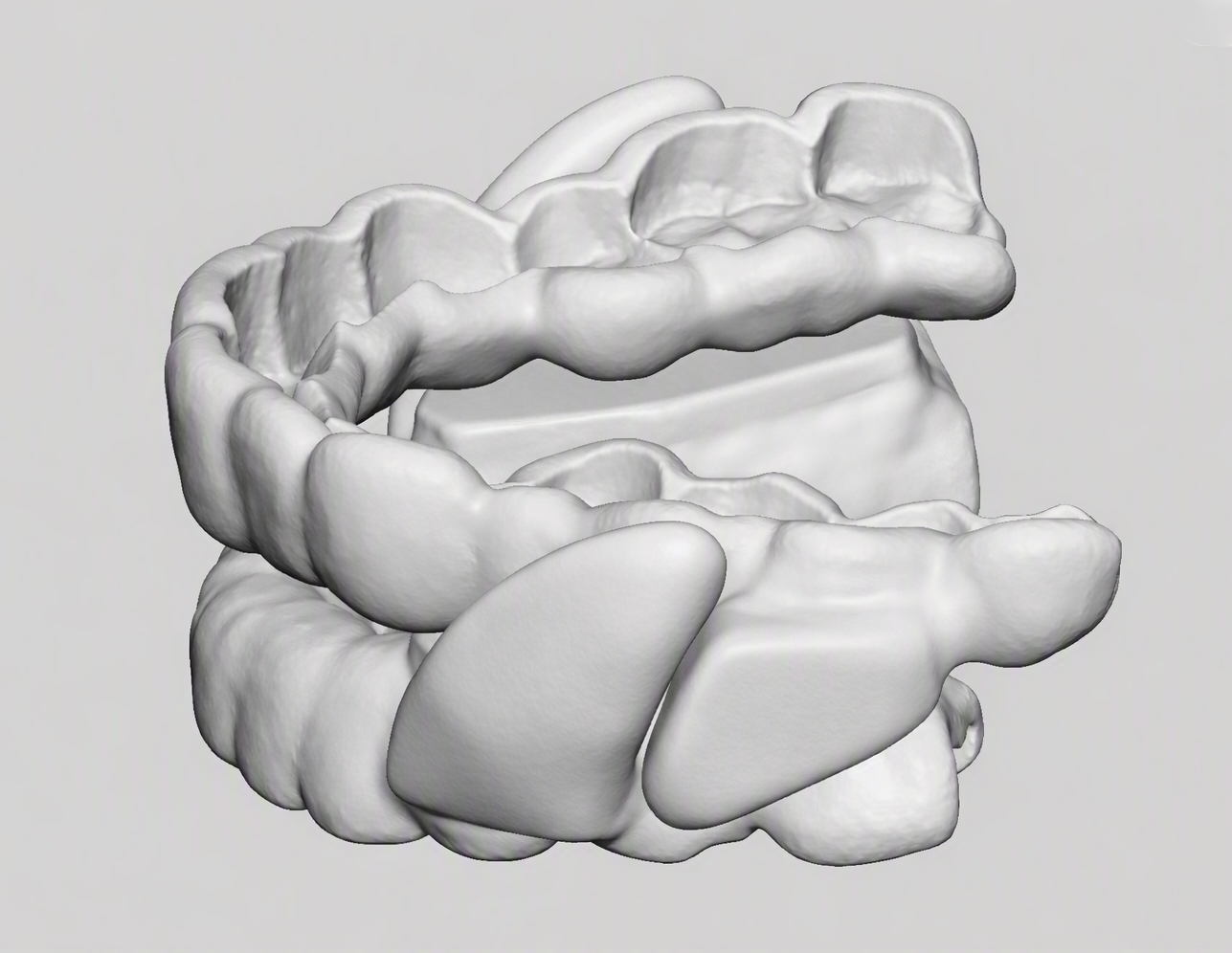
AIO Breathe oral appliance for Obstructive Sleep Apnea in children, teenagers and adults
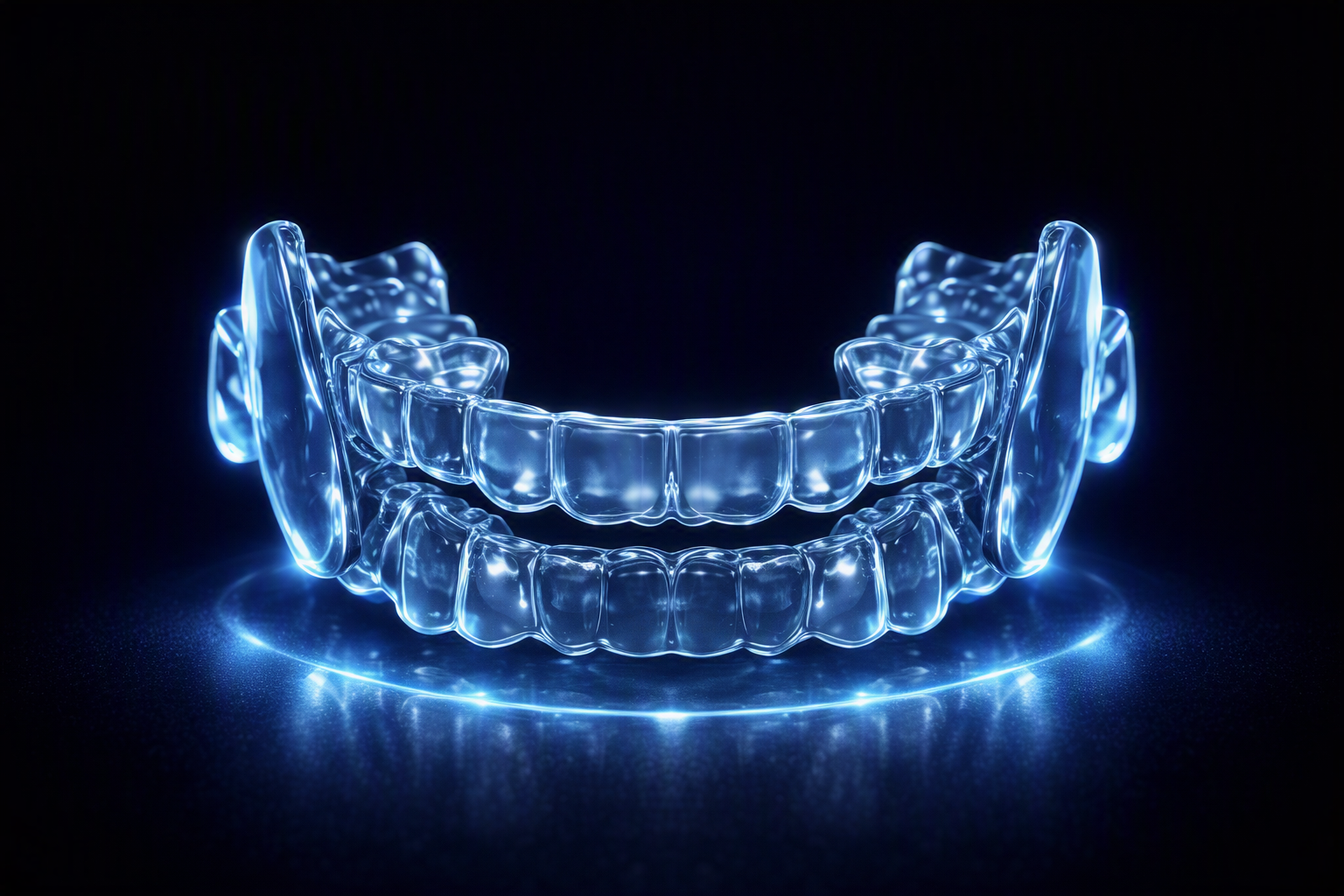
AIO Breathe oral appliance for Obstructive Sleep Apnea in children, teenagers and adults

AIO Breathe oral appliance for Obstructive Sleep Apnea in children, teenagers and adults
3 Patents advance AI-robotic maxillary-mandibular airflow improvement during physical activity, lays a foundation for sensor-enabled adaptive oral-devices
TYLER, TX, UNITED STATES, October 18, 2026 /EINPresswire.com/ -- AIOMEGA founder and inventor Raghavendra V. Ghuge today announced three granted Australian patents covering a developing portfolio of oral-airway technologies, including dynamic mandibular and lingual repositioning, maxillary and mandibular device systems, and technology specifically directed toward physical-activity applications.
The three grants expand the international intellectual-property foundation surrounding oral-device technologies developed by Ghuge and establish a platform for continued development in airway management, physical activity, sensing and future intelligent oral-device systems.
Australian Patent 2020381572,“Dynamic mandibular and lingual repositioning devices, controller station, and methods of treating and/or diagnosing medical disorders,” is recorded by IP Australia as granted, with a Standard Patent Certificate and Notice of Grant dated October 8, 2026. The public record identifies Ghuge as inventor and applicant. [ipsearch.i...lia.gov.au]
The portfolio also includes Australian Patent 2021379935,“MAXILLARY AND MANDIBULAR DEVICES, CONTROLLER STATION,” covering another dimension of the maxillary-mandibular device platform.
A third grant extends the technology into the physical-activity arena. Australian Patent 2022303524,“MAXILLARY AND MANDIBULAR DEVICES THAT INCREASE THE SMALLEST CONCENTRIC AIRWAY CROSS-SECTIONAL AREA OF A USER FOR IMPROVEMENTS DURING PHYSICAL ACTIVITIES,” is recorded by IP Australia as granted.
The public record identifies Ghuge as inventor and Sleep Solutions of Texas, LLC as applicant, with the Standard Patent Certificate dated September 24, 2026. [ipsearch.i...lia.gov.au]
Beyond the Conventional Oral Appliance
The physical-activity grant highlights a potentially important direction for oral-device innovation: moving beyond conventional sleep-related applications and
investigating how airway-oriented oral-device architectures may have relevance during physical activity and changing ventilatory demand.
Among the design concepts developed within this broader technology program are posterior-leaning curvilinear (PLL) and posterior-leaning linear (PLC) geometries.
AIOMEGA believes these concepts warrant continued engineering and scientific investigation, including study of progressive mandibular positioning and airway behavior associated with mouth opening during physical activity.
“We have never viewed this technology as simply another oral appliance,” said Ghuge. “The Australian patent portfolio reflects a much broader effort to understand how oral-device architecture, mandibular and lingual positioning, airway geometry and ultimately intelligent control technologies might be brought together into a new generation of functional oral devices.”
A New Research Direction: High-Performance Athletics
The granted physical-activity patent creates an opportunity to investigate these technologies in applications beyond sleep medicine. AIOMEGA is particularly interested in future research involving high-performance athletes, including opportunities for collaboration in Australia.
The objective would be scientific evaluation, not an assumption of athletic benefit: investigating relationships among oral-device geometry, airway behavior and physiological or performance-related measurements during changing levels of physical demand.
Australia's strong sporting and sports-science environment makes it of particular interest for potential future research collaborations.
“A fascinating research question is what happens when an oral-device system is designed around the changing physiology and ventilatory requirements of physical activity rather than around a single static position,” Ghuge said. “That is something we believe deserves rigorous investigation.”
From Mechanical Devices Toward Intelligent Oral-Airway Systems
AIOMEGA's longer-term development vision extends beyond mechanical geometry.
The company is exploring the potential integration of sensors, receptor technologies, data acquisition and robotic or adaptive control concepts into future oral-device platforms. The research objective is to investigate whether physiologic and device-derived signals could help characterize airway and performance-related responses during physical activity and eventually contribute to responsive oral-device behavior.
Such development could create a progression from:
PLL/PLC oral-device geometry → airway-oriented mechanical function → sensing and physiologic data → performance-related monitoring → adaptive or robotic control.
These concepts represent prospective research and development directions and should not be interpreted as claims that an existing AIOMEGA product has been clinically demonstrated to improve athletic performance.
“The long-term question is whether the oral appliance of the future can become an intelligent, responsive platform rather than remaining a purely static mechanical device,” said Ghuge. “We envision exploring sensing, receptor technology, performance tracking and ultimately adaptive control alongside the airway architecture we have spent years developing.”
Building an International Intellectual-Property Platform
The three Australian grants establish complementary intellectual-property positions around multiple aspects of oral-airway technology.
Patent 2020381572 addresses dynamic mandibular and lingual repositioning and associated controller technologies. Patent 2022303524 establishes granted protection around technology expressly directed toward increasing the smallest concentric airway cross-sectional area for improvements during physical activities. Together with Patent 2021379935, the grants represent an expanding Australian intellectual-property position. [ipsearch.i...lia.gov.au] [ipsearch.i...lia.gov.au]
“Receiving these three Australian patent grants is an important milestone,” Ghuge said. “But to us, the patents are not the end of the story. They provide a foundation from which we can continue developing, studying and ultimately translating these technologies into meaningful applications.”
Looking further ahead, AIOMEGA envisions investigating machine learning as the analytical layer connecting oral-device sensors, physiologic signals, athletic-performance data and future robotic or adaptive mechanisms. Rather than functioning solely as a passive appliance, a future intelligent oral platform could potentially collect longitudinal data during training and physical activity and use machine-learning models to identify patterns associated with individual physiology, airway behavior, oral-device position and changing performance demands. These research concepts could ultimately be evaluated alongside robotic or electronically controlled mechanisms capable of modifying device configuration in response to defined inputs. Advances elsewhere in intraoral wearable technology have already demonstrated the feasibility of combining embedded sensing, wireless monitoring and machine-learning analysis, supporting the broader scientific rationale for investigating intelligent intraoral platforms.
“Our long-term vision is a closed-loop research platform: sense, learn, respond and measure,” said Raghavendra Ghuge. “The opportunity is to study whether machine learning and adaptive technologies can ultimately help personalize oral-airway systems to the individual athlete and the changing demands of physical activity.”
About AIOMEGA
AIOMEGA is a medical-technology company developing oral-device technologies and related clinical, educational and technology platforms. Its work includes AIOMEGA Breathe and continuing research and development involving oral-device architecture, airway management, sensing and next-generation intelligent device concepts.
Media and Business Development Contact
Advait Ghuge, BS
Raghu Ghuge, MD, MBA
AIOMEGA
Tyler, Texas
info@aiomd.com
(903) 787-7533
www.aiomd.com
Raghavendra Vithalrao Ghuge
AIOMEGA LLC
+1 903-316-1269
Visit us on social media:
LinkedIn
Instagram
Facebook
Legal Disclaimer:
EIN Presswire provides this news content "as is" without warranty of any kind. We do not accept any responsibility or liability for the accuracy, content, images, videos, licenses, completeness, legality, or reliability of the information contained in this article. If you have any complaints or copyright issues related to this article, kindly contact the author above.
